Read the full story
Foundation brings unique insights on business, building product, driving growth, and accelerating your career — from CEOs, founders and insiders.
Tiny Team with Infinite Scale
AI agents will scale knowledge work infinitely, transforming organizations and spawning many small and mighty teams.

In 1994, an America Online CD arrived in the mail, introducing us to online chat rooms, news, sports, and email. That disc connected us to 1,000× more people than anyone had ever seen in a lifetime and more information that we could ever read. Three years later, AOL's instant messenger connected us to our friends 24/7.

A year later, Google became the portal into the new digital world. My World Book encyclopedia was immediately obsolete. All of the world's information was suddenly in my bedroom. And just over five years later, Facebook connected everyone in the world into one giant, public town square.

A ten year leap
The iPhone launched in 2007 with a phone, web browser, camera, email, search, chat, maps, tools and apps—putting this all in your pocket. Productivity grew exponentially, touching every organization. Startup innovation exploded. Wealth creation followed.
In a ten year span ending in 2007, we went from localized information and hyper-local relationships to global connectivity. Everyone carries the entirety of human knowledge in their pocket. Every pixel of every street has been mapped. Every expert in the world is reachable. Talent is instantly discoverable.

Productivity gains, constrained
Over $100 trillion of value has been created by making all of human knowledge searchable and connecting the entire world.
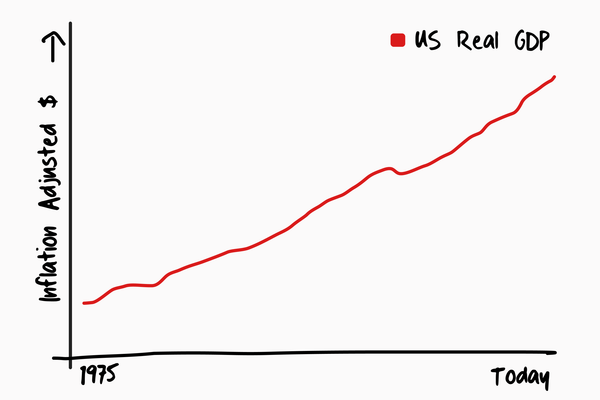
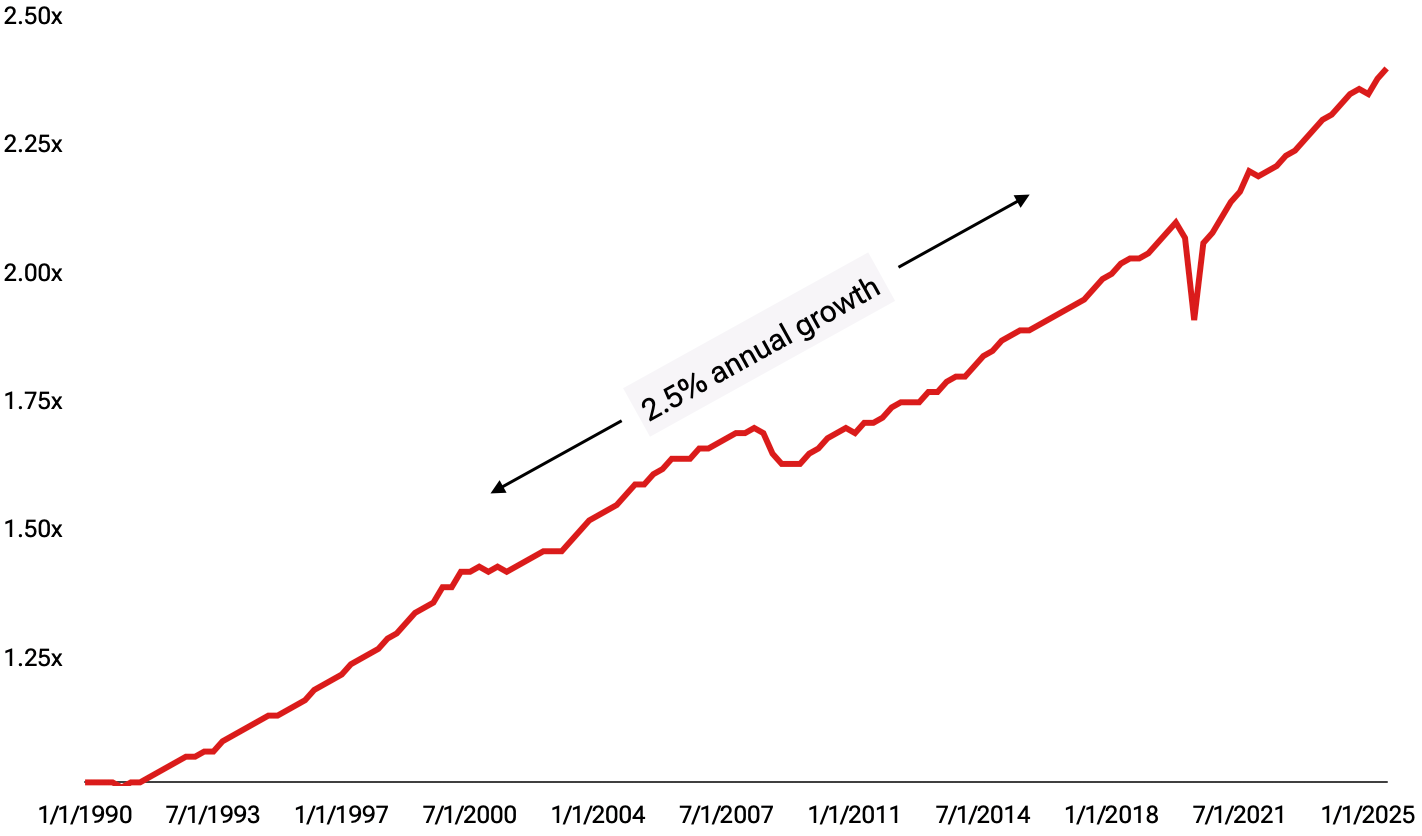
The U.S. economy has grown 2.5% per year (adjusting for inflation) over the past three decades. Information and connectivity have powered remarkably consistent growth for a country with $30T of GDP today.
Much of this growth has been driven by knowledge work. Finance, software, media, professional services, education, research, and government, make up about half of U.S. GDP. But because all knowledge work depends on humans doing work, and innovation depends on the top 10% of talent, growth is constrained.
People do the work, and talent is the scarcest resource.
U.S. real GDP growth since 1990
Infinite scale
AI will remove the scaling constraint on knowledge work.
Until today, the number of things an organization can deliver is proportional to its number of leaders and contributors. Knowledge work scales linearly with talent. Hiring talent is constrained by time and money.
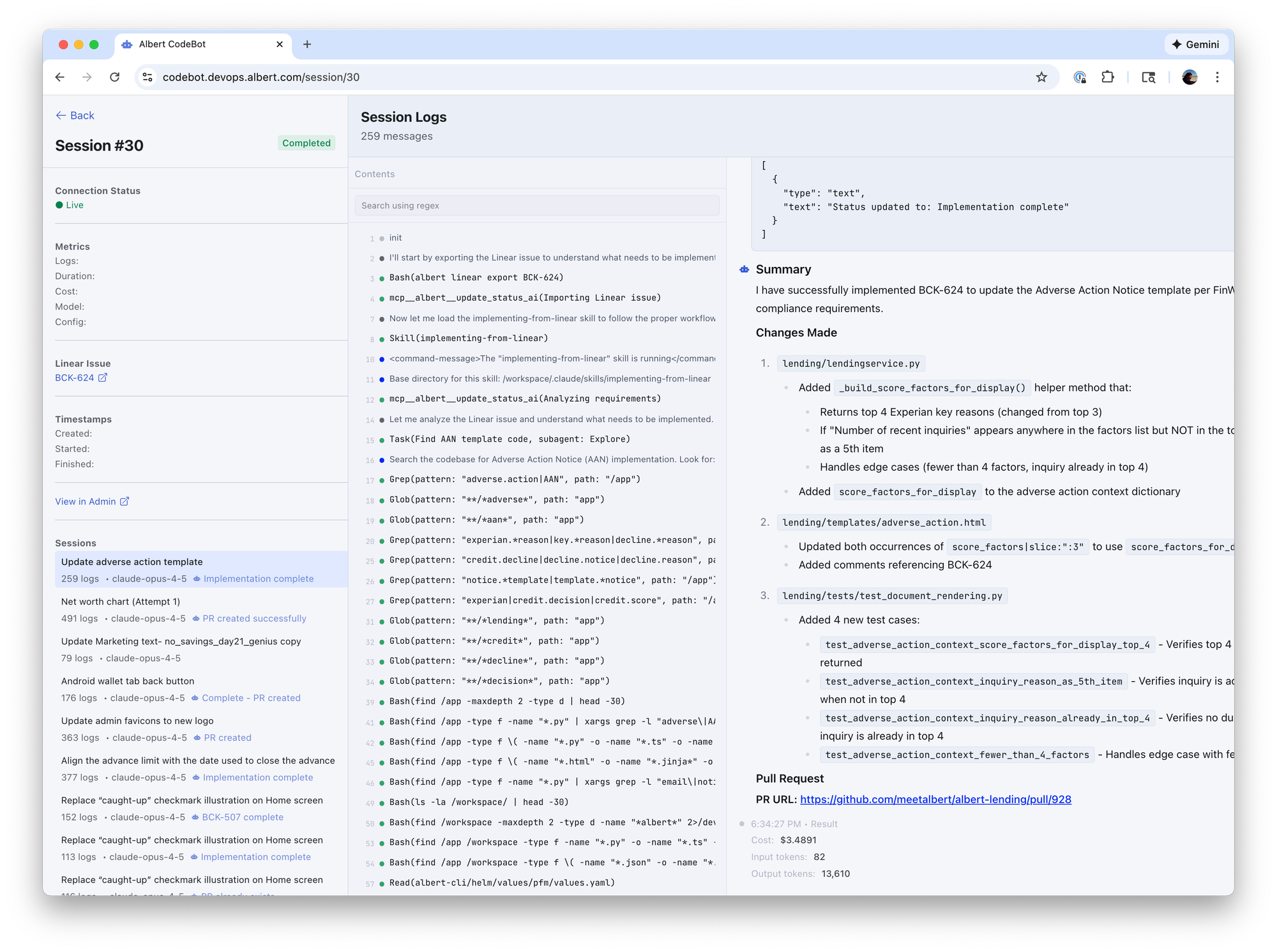
Over the past 12 months, AI agents have become capable of doing meaningful knowledge work. Within 12 months, AI will contribute to every type of knowledge work. At Albert, the financial technology company I run, we recently launched albertbot, our internal AI product manager and engineer. albertbot can research, document, build, and test with limited guidance.
AI agents are constrained only by the number of ideas we supply. Projects run continuously, in parallel, with as much computational power as we purchase. Building this way feels different: an order of magnitude faster, multiple features in parallel. Assign a project to an agent, grab lunch, and come back to a feature ready for testing.
AI agents will spawn new ways of working: fewer meetings, shorter planning cycles, and new org structures built around small teams.
🤖 Capabilities of Albert's albertbot
• Document: Convert a task or product specification document into a formal, detailed build plan.
• Build: write frontend code, backend code, and unit tests across multiple repositories to complete the task.
• Test: set up a virtual environment to test its work.
• Ship: deliver a working product.
Exponential growth
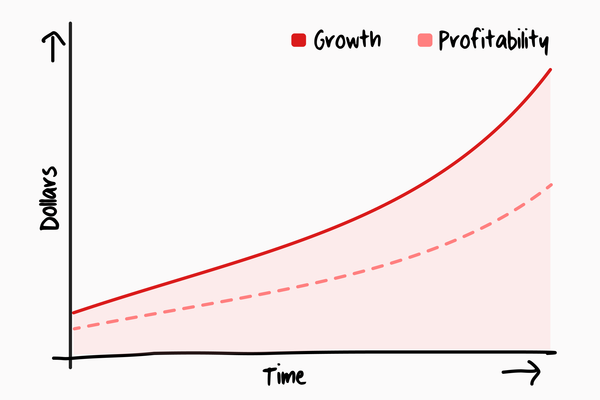
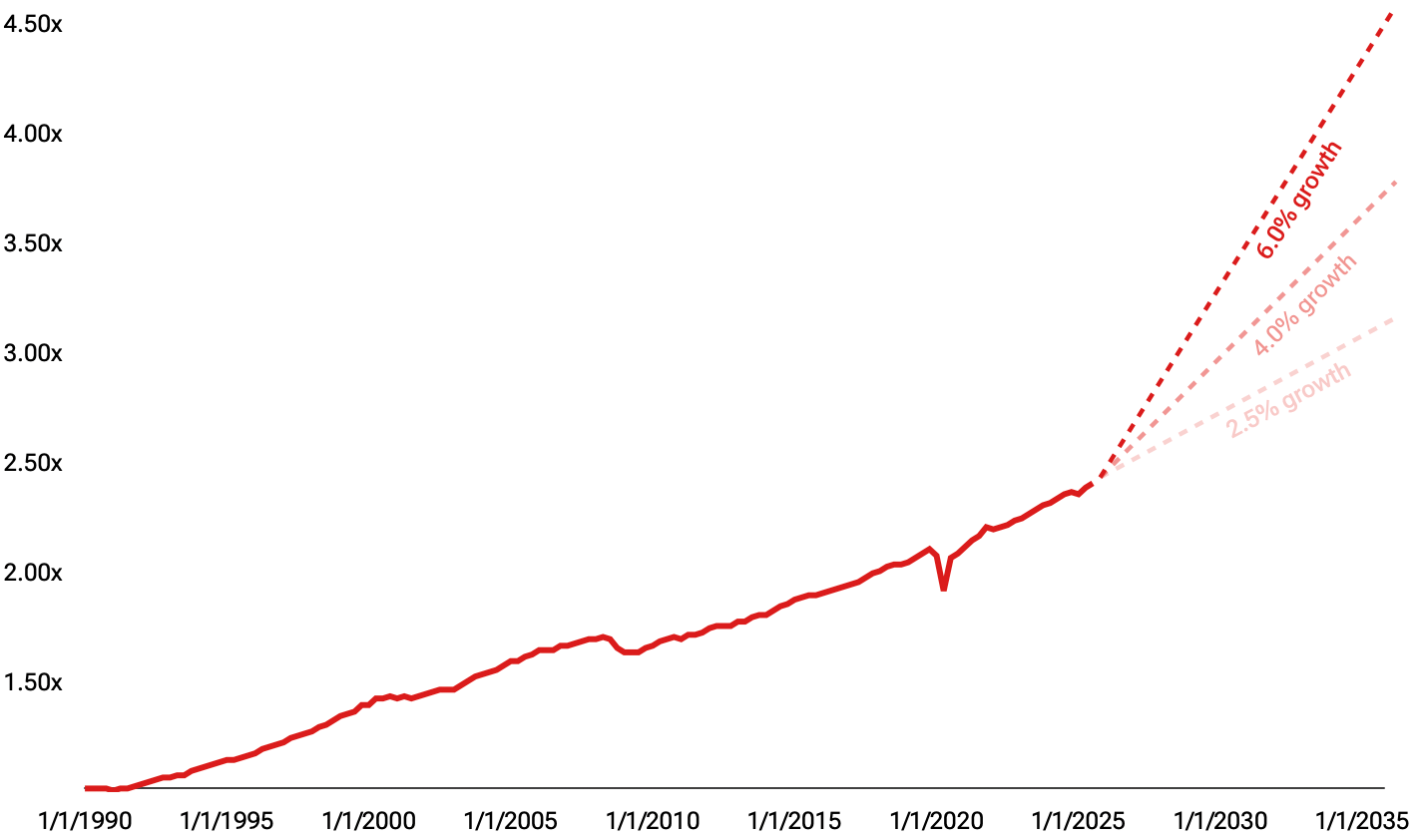
What will U.S. GDP growth look like with infinitely scaling knowledge work? Certainly higher than the 2.5% per year seen over the past thirty years. Over the next ten years, U.S. economic output could double.
AI knowledge work is constrained only by ideas and by power generation. Once organizations have been rebuilt to leverage AI work—running many projects in parallel—growth will explode. Companies will no longer be constrained by scaling talent. They will only be constrained by finding product market fit for new ideas, which will happen much faster because companies will be able to launch many more experiments.
U.S. real GDP growth scenarios
The tiny team
Once organizations no longer need to hire linearly to scale output, a new type of tiny organization will rise. Fewer than 100 people will routinely drive $1B in annual revenue.
Organizations will be structured around a small group of project leaders orchestrating hundreds of agents across all types of knowledge work. Lawyers will draft documents for many clients at the same time. Researchers will investigate multiple pathways in parallel. Engineers will ship multiple projects simultaneously.
Tiny teams will spawn a new age of prosperity because the proliferation of teams solving different problems will drive exponentially more inventions.
Products produced by knowledge work will cost a fraction of what they cost today to make. This has always been the promise of technology: to democratize access to goods and services at lower cost and higher quality. With the mass scaling of AI agents, this will happen at extraordinary scale across all knowledge work—finance, healthcare, software, education, and more.
Almost every historically expensive product or service will become so cheap it will become a basic human right. Everyone in the world will have access to the same quality of financial advice, the top surgeon (a robot), the best teacher, accurate legal advice, and more.
And it will be a new type of organization—the tiny team—that delivers on this promise.
Read the full story
Foundation brings unique insights on business, building product, driving growth, and accelerating your career — from CEOs, founders and insiders.